Drug development is advancing rapidly. The manufacturing industry often struggles to keep up. A promising therapy can stall for months if production capacity is limited or technical expertise is lacking.
According to recent industry reports, there is a huge percentage of pharmaceutical companies that outsource their manufacturing to specialized partners. That shift has pushed CDMO services to the center of modern drug production.
Saving money isn't the only concern when it comes to efficient outsourcing. It helps companies achieve manufacturing scale, reduce time and resource investment in research and creation. The blog outlines the benefits of CDMO services for CMO contract manufacturing and why more and more pharmaceutical teams are using them.
Understanding CDMO services in pharmaceutical manufacturing
A contract development and manufacturing organization (CDMO) supports pharmaceutical companies throughout the drug lifecycle. Services typically cover both the development and production stages.
Core capabilities typically include:
- Drug formulation and process development
- Analytical testing and quality control
- Clinical trial manufacturing
- Commercial scale production
Traditional CMO contract manufacturing focuses primarily on production. CDMOs further develop that model by assisting in the initial development work. This integration forms a more fluid pipeline between laboratory research and large-scale manufacturing.
Pharmaceutical companies benefit from a partner that understands the entire process rather than just one stage.
Why efficiency in contract manufacturing is important
Manufacturing efficiency directly affects drug availability, regulatory approval timelines, and overall project cost.
Common challenges include: They resolve these issues quickly. compared to internal teams acting individually.
Key Ways CDMO Services Improve Manufacturing Efficiency
1. Access to specialized expertise
Drug manufacturing requires deep technical knowledge. Areas such as biologics production, sterile filling, or complex APIs involve tight process control.
CDMO services provide experienced teams that work with these technologies on a daily basis.
Benefits include:
- Faster process development
- Reduced production errors
- Strict regulations compliance
CDMO's experienced scientists and engineers often identify production improvements in the early stages of development.
2. Faster scaling from clinical to commercial production
One of the most difficult transitions in pharmaceutical manufacturing is related to the change from laboratory batches to commercial production.
Scaling challenges can include:
- Differences in equipment
- Process reproducibility
- Quality Validation
CDMOs already operate large manufacturing facilities designed for scale. Production processes developed in the early phases can transition to commercial manufacturing with fewer interruptions.
This continuity improves the overall efficiency of CMO contract manufacturing.
3. Advanced Manufacturing Infrastructure
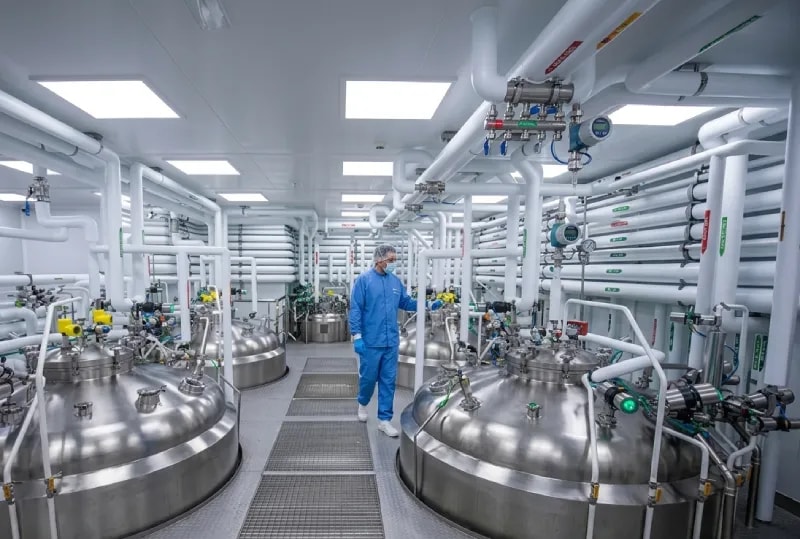
Pharmaceutical manufacturing plants are very expensive to build. Clean rooms, special reactors and laboratories are expensive to build and operate.
CDMO facilities already include:
- GMP-compliant production lines
- validated manufacturing equipment
- advanced analytical laboratories
Companies Pharmaceutical companies gain immediate access to this infrastructure without large capital investments.
4. Flexible production capacity
Demand for a drug can change rapidly. The success of clinical trials may require rapid increases in production.
CDMOs provide flexibility through:
- modular manufacturing systems
- multiple production sets
- adaptable batch sizes
This flexibility allows companies to adjust the manufacturing volumes without delays.
5. Strong regulatory support
Manufacturing of pharmaceutical products must be carried out under international regulatory guidelines such as Good Manufacturing Practices (GMP).
Regulatory teams within CDMOs help manage:
- documentation requirements
- process validation
- regulatory inspections
Knowledge of compliance reduces approval risks and moves products through regulatory review more efficiently.
Conclusion
The pharmaceutical production process has evolved to become complicated and in-house production facilities have, in most cases, failed to meet changing technological and regulatory needs.
CDMO services offer a practical solution by combining development expertise, modern manufacturing infrastructure and regulatory support in one place.